
Knowing the best time for gorilla trekking in Rwanda is a question that arrives early in every Rwanda gorilla trekking planning conversation and it is one whose honest, specific, and personally useful answer makes a genuine practical difference to the comfort, the cost, and the overall quality of the forest encounter that every traveler makes the extraordinary journey to Volcanoes National Park to experience.
When is the best time for gorilla trekking in Rwanda? The answer is more personally applicable, and more genuinely useful than the standard “dry season is best” response that most travel websites provide with the confident brevity of information that tells part of the story but not the complete, honest, and practically empowering whole that every Rwanda gorilla trekking traveler deserves to understand before booking permits, reserving accommodation, and committing to the specific travel dates whose selection determines so much about the personal character and physical experience of the forest encounter waiting at the journey’s end.
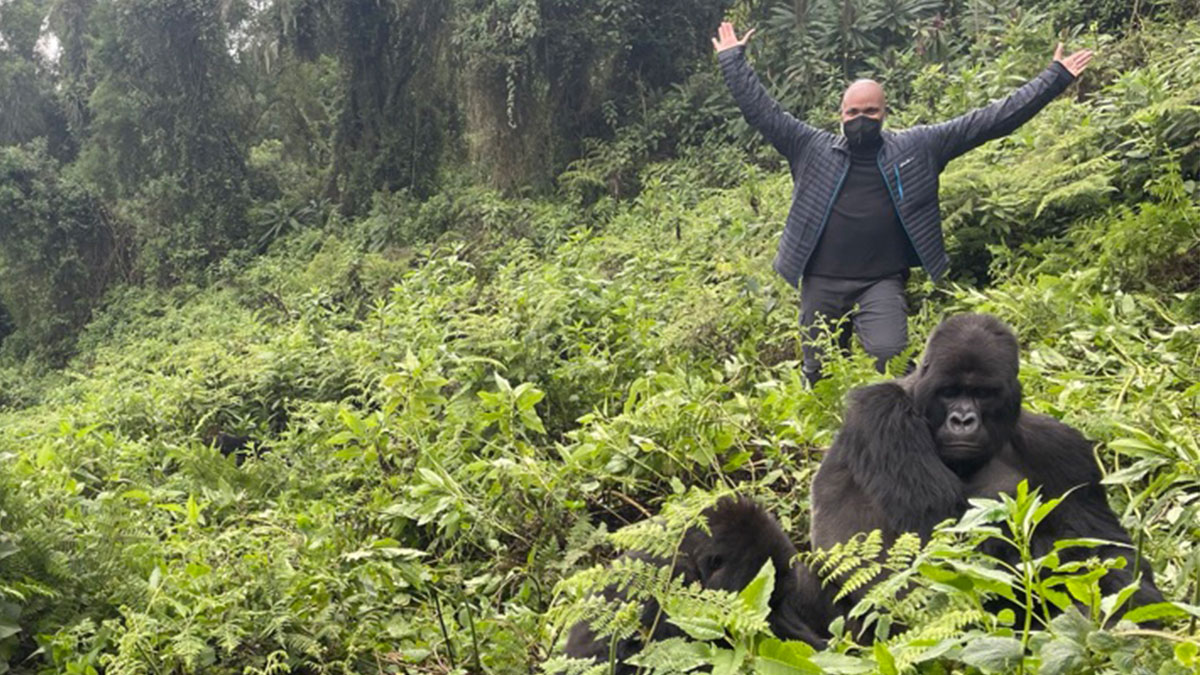
Best Time for Gorilla Trekking in Rwanda.
Gorilla Trekking Is Rewarding Year-Round.
The most important and most genuinely reassuring starting point for the Rwanda gorilla trekking timing conversation is the honest acknowledgment that mountain gorillas live in Volcanoes National Park year round their permanent forest residency, their year-round habituation, and the Rwanda Development Board’s consistent permit issuance across every month of the calendar ensuring that the extraordinary one-hour encounter with a habituated gorilla family is equally achievable, equally personally moving, and equally biologically extraordinary regardless of the specific month in which it occurs.
The seasonal differences that distinguish the dry season trekking experience from the wet season alternative are real and practically significant but they are differences of physical comfort, trail conditions, accommodation pricing, and atmospheric forest character rather than differences of encounter quality, gorilla family accessibility, or the fundamental personal impact of the wildlife meeting whose extraordinary power is entirely independent of whether the forest floor is dry or muddy and whether the volcanic peaks are visible or cloud-wrapped on the morning of the trek.
Dry Seasons: June to September and December to February.
The two dry seasons June through September and December through February are Rwanda’s most popular and most widely recommended gorilla trekking periods, and the specific practical advantages they deliver over the wet season alternatives are genuine, consistent, and of sufficient personal significance that the majority of international gorilla trekking travelers choose these windows for their Rwanda visits with entirely justified confidence in the decision.
June through September is Rwanda’s primary dry season and the most internationally sought-after gorilla trekking window the combination of firm forest trails, reduced humidity, clear volcanic peak visibility, and the comfortable trekking temperatures of the highland dry season creating physical conditions of outstanding personal ease and logistical reliability that make this period the most consistently recommended for first-time gorilla trekking visitors whose physical preparation and personal comfort preferences favor the most favorable possible trail conditions for their inaugural forest encounter.
The June through September window additionally coincides with Rwanda’s peak tourism season whose accommodation demand, permit competition, and advance booking requirements reach their annual maximum during these months and whose planning implications for the prospective gorilla trekker are both practically significant and entirely manageable with the six to twelve month advance booking timeline that the peak season’s limited permit availability makes genuinely non-negotiable for travelers whose first-choice permits dates and accommodation preferences cannot be satisfied by the market’s remaining inventory after the advance booking competition of the peak season has run its course.
December through February delivers the secondary dry season’s excellent trekking conditions alongside the meaningful practical advantage of reduced visitor numbers relative to the June through September peak creating a gorilla trekking window of outstanding physical comfort and good permit availability whose combination of dry trail conditions, competitive accommodation rates relative to the main peak season, and the quieter, more personally intimate atmosphere of a less heavily visited Volcanoes National Park creates one of the most consistently rewarding and most personally satisfying timing options available in the annual Rwanda gorilla trekking calendar.
Wet Seasons: March to May and October to November.
The wet seasons March through May and October through November bring heavier rainfall, muddier trail conditions, and the dramatically atmospheric mist-wrapped forest character that experienced Volcanoes National Park guides describe with genuine personal affection as the most visually extraordinary version of a forest that is extraordinary in every season and every weather condition.
March through May the long rains delivers the most significant rainfall of the annual cycle whose impact on trail conditions creates the most physically demanding trekking environment available in the Rwanda gorilla calendar. The forest floor becomes genuinely muddy, the vegetation is maximally lush and dense, and the trail gradients that are manageable in dry conditions become meaningfully more challenging in the wet season’s slippery, rain-saturated state. Waterproof boots, gaiters, and the physical confidence to manage steep muddy slopes without anxiety are more important during the long rains than in any other trekking period and the traveler who arrives with adequate physical preparation and appropriate footwear finds the wet season forest not a compromise but a genuinely different and personally rewarding version of the same extraordinary encounter whose gorilla family is equally present, equally habituated, and equally willing to deliver the one-hour meeting that makes every Rwanda gorilla trekking visit completely and permanently extraordinary.
The wet season’s most compelling practical advantage is low accommodation rates during March through May dropping by 20 to 40 percent relative to peak season equivalents, creating a gorilla trekking budget opportunity of considerable personal significance for the financially conscious traveler whose permit cost of USD 1,500 represents the most significant single safari expense and whose accommodation savings during the wet season create meaningful room for the overall Rwanda safari budget to accommodate the premium permit fee with greater financial comfort and personal ease.
October through November the short rains delivers a briefer, less intense wet season whose rainfall pattern of concentrated afternoon showers rather than sustained all-day precipitation creates trekking conditions that are only moderately more challenging than the dry season alternative and whose short duration between the two dry season windows makes it the most practically accessible wet season trekking option for travelers whose scheduling flexibility extends to the shoulder season but not to the deeper wet season months of April and May.
Book a trip with Wider Africa Holidays
The best time for gorilla trekking in Rwanda is the time that best matches the individual traveler’s specific combination of physical comfort preferences, budget parameters, advance booking capability, and personal tolerance for the physical challenges and atmospheric rewards that each season delivers in its own entirely distinct and entirely rewarding way. Contact us today to plan your gorilla trip
Every month of the Rwanda gorilla trekking calendar offers the one-hour encounter with a mountain gorilla family whose personal impact, conservation significance, and lasting individual meaning are completely independent of the trail conditions, the weather, and the season surrounding them and the traveler who arrives at Kinigi park headquarters on any morning of any month with a confirmed permit, appropriate footwear, adequate physical preparation, and the genuine personal openness to be moved by what the forest delivers will find, without exception, that the timing question whose answer seemed so important during the planning process dissolves entirely and immediately in the first extraordinary moment of the gorilla encounter a moment of such concentrated personal power and permanent individual significance that it renders every seasonal consideration instantly, completely, and permanently irrelevant.


