
Great Migration is one of the exceptional wildlife experiences that impress you, and then there are wildlife experiences that genuinely change you. The Great Migration in the Masai Mara falls firmly into the second category. Standing on the banks of the Mara River watching hundreds of thousands of wildebeest hurl themselves into crocodile-filled water, driven by an instinct older than memory, is one of those moments that puts everything in your life into an immediate and humbling perspective. It is chaotic, it is dramatic, it is occasionally brutal, and it is absolutely magnificent. If you are serious about seeing it, here is everything you need to know about when to go and how to make the most of every single day you spend there.
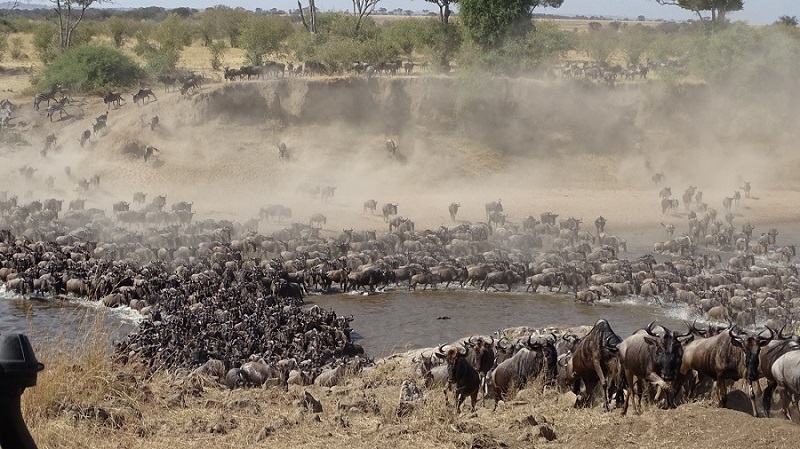
The Great Migration in Masai Mara National Reserve
What the Great Migration Actually Is.
Great Migration is not a single event that happens on a fixed date each year. It is a continuous, circular journey that approximately 1.5 million wildebeest, along with around 400,000 zebras and significant numbers of Thomson’s gazelles, make through the greater Serengeti-Mara ecosystem in an endless search for fresh grass and water. The herds move between Tanzania’s Serengeti National Park in the south and Kenya’s Masai Mara National Reserve in the north, completing a loop of roughly 1,200 kilometers every year. Different parts of this journey offer different spectacles, and understanding the annual calendar is the key to planning a trip that matches exactly what you want to see.
The Annual Migration Calendar.
The migration follows a broadly predictable seasonal pattern, though the exact timing shifts slightly from year to year depending on the rains. Here is how the year typically unfolds:
January to March The herds are in the southern Serengeti and Ndutu area of Tanzania, where the calving season takes place. Around 500,000 calves are born within a matter of weeks, attracting enormous concentrations of predators
April to June the wildebeest begin moving northwest through the central and western Serengeti as the long rains arrive and the grass in the south dries out
July to October the herds cross into Kenya’s Masai Mara, and the famous Mara River crossings are happening at their most dramatic and frequent
November to December the short rains arrive and the herds begin moving south again back toward Tanzania, completing the cycle
When Is the Best Time to Visit the Masai Mara.
If your primary goal is to witness the Mara River crossings and for most travelers it is then July through October is the window you are aiming for. The peak of the action is typically between late July and September, when the largest concentrations of wildebeest are present on the Kenyan side and the river crossings are happening most regularly. October can also be excellent, with fewer visitors than the peak months and herds still present before they begin moving south again.
It is worth saying honestly that river crossings are not guaranteed on any given day. The wildebeest are unpredictable animals and they can gather on the riverbank for hours, building tension to an almost unbearable level, and then simply turn around and walk away without crossing. This is part of what makes the experience so genuinely wild and unscripted. Most visitors who spend three or more days in the Mara during the peak window will witness at least one crossing, and many will see several. The key is patience, a good guide who knows the river well, and a willingness to spend time waiting in quiet anticipation.
How to See the Migration Properly.
Seeing the Great Migration well comes down to three things where you stay, who guides you, and how much time you give yourself.
Where you stay matters enormously. Camps and lodges positioned close to the Mara River give you the fastest access to the crossing points and mean you are not spending half your game drive time simply travelling to the action. The private conservancies that border the main reserve, including Olare Motorogi, Mara North, and Naboisho, offer an outstanding alternative to the main reserve itself. These conservancies have lower vehicle limits at sightings, allow off-road driving, and permit night game drives that the main national reserve does not all of which dramatically improve the quality of your overall experience.
Your guide is the single most important factor in a successful migration safari. A guide who has spent years working the Mara and has a deep understanding of wildebeest behavior, crossing patterns, and river dynamics will get you into position for the right crossings at the right time. Ask specifically about your guide’s experience with the migration before you book.
Give yourself at least four nights in the Mara if you are coming specifically for the migration. Three nights is workable but tight, and the extra day can make the difference between missing all the crossings and witnessing something you will describe to people for the rest of your life.
A Few Practical Things to Know.
Masai Mara is one of Kenya’s most visited wildlife areas, and during peak migration season the main reserve can feel busy. Booking well in advance is absolutely essential quality camps and lodges in the best locations fill up twelve months ahead during July and August. Budget for the full experience including park fees, conservation levies for private conservancies, and gratuities for your guide and camp staff. And pack layers mornings in the Mara are cool and crisp before the day warms up, and early game drives start before sunrise.
The Great Migration is one of the last truly wild spectacles left on this planet. Go soon, go prepared, and go with an open mind. It will not disappoint you.
Travel with Wilder Africa Holidays to Masai Mara.Wilder Africa holidays will help you book your safari to Masai Mara Kenya, book in advance to have the best experience and incorporate all interests. Choose the accommodation that matches your values alongside your comfort requirements. Book your tour today


